Temple History
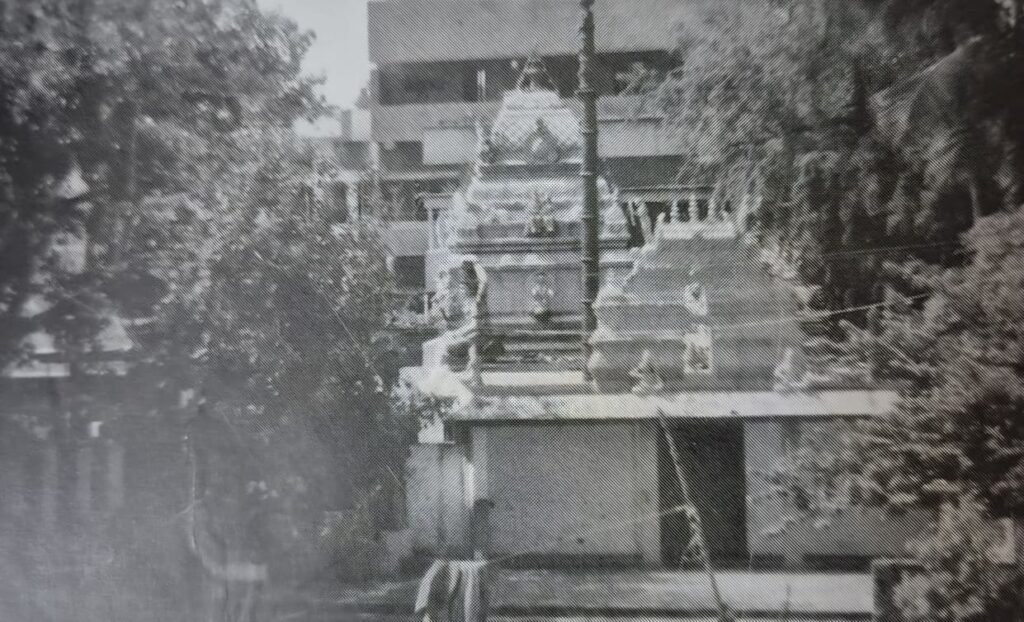
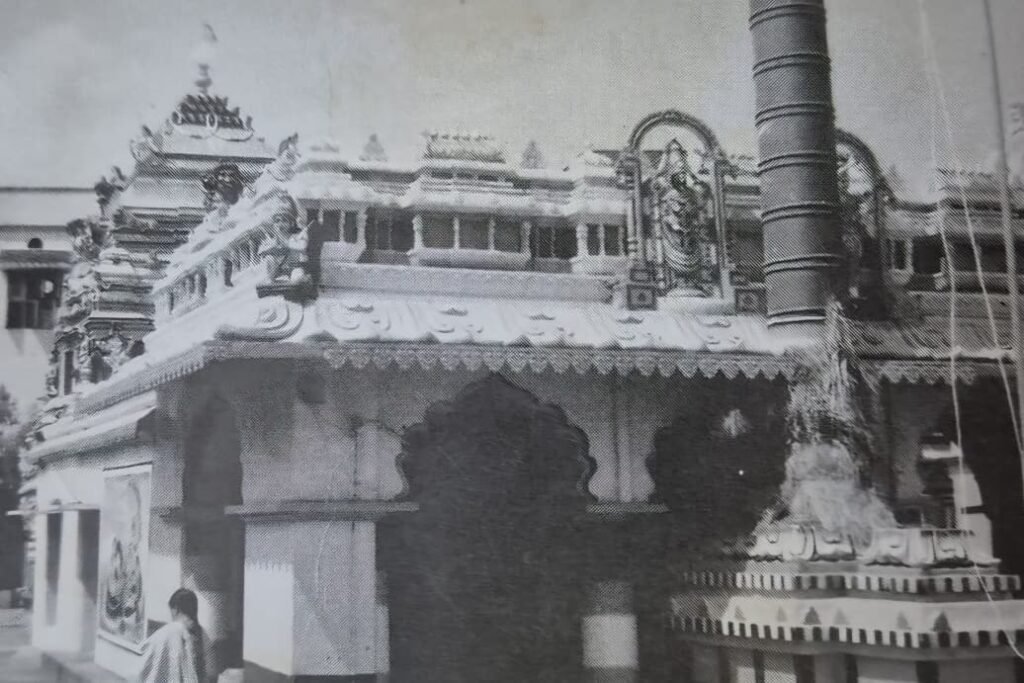
The Lord Venkateswara residing at Yanam is affectionately known by several names:
- Venkanna Babu
- Chaldikudu Venkanna
- Meesala Venkanna
Why is Yanam Venkanna Babu Called Meesala Venkanna?
After the reign of the Chalukyas, Yanam came under the rule of the Reddy Rajas during the 14th–15th century. One of the Reddy kings visited the shrine of Lord Venkanna Swamy. Upon seeing the idol, he felt that something was missing in its divine form.
He suggested adding a moustache to the idol, symbolizing strength and dignity. From that day onward, the Lord came to be affectionately known as “Meesala Venkanna Swamy”.
Why is Yanam Venkanna Babu Called Chaldikudu Venkanna?
One day, Venkanna Babu’s mother asked him to do fasting along with his brothers. Since the divine child could not fast, he partook of the chaddi annam. From this loving act, he came to be affectionately known as “Chaldikudu Venkanna.”
Unlike other temples, where the naivedyam (food offering) is presented after the pooja, at Yanam Venkanna Babu Temple, the pooja is performed only after offering the naivedyam to the Lord. This unique tradition highlights the special devotion and grace of Lord Venkanna Babu.
Note: These stories are based on popular beliefs and videos; their historical accuracy cannot be confirmed.
History
The temple is believed to have been constructed in the 15th century by the kings of Rajamahendravaram (modern-day Rajahmundry), who were part of the Chalukya dynasty. Many sculptures from that period are still preserved within the temple premises.
Historical Significance
The temple gained fame during the pre-independence period for conducting child marriages.
- Social reformer Raja Ram Mohan Roy strongly opposed this practice, leading to the implementation of the Sarda Act (Prevention of Child Marriages) by the British Government.
- As Yanam was under French rule, families from nearby British-ruled areas came to Yanam to conduct child marriages.
- Families from Madras, Hyderabad, and other distant places also visited for this purpose.
Thousands of marriages were conducted daily, earning Yanam the title “Kalyana Puram” (Town of Marriage)
Temple Features
- The idol of Lord Venkateswara Swamy is adorned with large mustaches, reminiscent of Lord Satyanarayana Swamy of Annavaram.
- Built in the 15th century by the kings of Rajamahendravaram.
- Historical sculptures from that era remain visible within the temple.
Venkanna Festival
- Celebrated annually in March with great devotion.
- The festival lasts for approximately one month.
- Main Event: Lord Venkateswara Kalyanam
- Other Events: Ponnavahanam, Ratha Yatra, Chakrateertham
- Attendance: Nearly 1.5 lakh devotees participate each year
- Another festival named Brahmōtsavam in the month of Kārtika (Sep/Oct) is also celebrated.
The Venkanna Ratham
- The temple chariot (Ratham) weighs around 15 tonnes.
- Constructed in 1950 by the temple committee.
- Damaged during the November 1996 cyclone and renovated in 1998.
- Traditionally carried across the entire Yanam town, now limited to the Kunameddy Junction – New Bus Stand route due to electrification.
- Pulled by devotees with chants and bhajans.
Challenges / Recent Issues
- The temple was considered dilapidated, leading to concerns over safety. There were plans / actions for renovation or facelift.
- In 2020, there was a controversial demolition of part of the temple for renovation / facelift. Some locals raised concerns.
- The government sanctioned significant funds (several crores rupees) for improving facilities, sanitation, drainage, removing water stagnation, etc.
Tourist & Devotional Attraction
- The temple is a major pilgrimage site in Yanam. During festivals, devotees from surrounding districts and states (Andhra Pradesh especially) come in large numbers.
- It is also a key cultural landmark in Yanam — it reflects architectural history, colonial-hybrid culture (French rule of Yanam), religious customs, etc.
Government Recognition
- The government declares a local holiday for all offices during the festival celebrations.
Location & Access
- The temple is located on Vishnalayam Street (Rue Vichenou) in Yanam.
- Closest major transport hubs: Nearest railway station is in Kakinada (~ 26–30 km away). Nearest airport is Rajahmundry (Rajamahendri) (~80 km).
- Good road connections exist from nearby Andhra Pradesh districts.
HISTORY OF THE GOD
SRI VENKATESWARA SWAMY OF YANAM
For a longtime, every year, from 13th February to 2nd March the statuette of “Sri Venkateswara Swamy”, according to the Brahminical religion, is decorated with new clothes for the wedding anniversary. Since then, on columns (vahanamlu)
- Sarpa Vahanam
- Sesa Vahanam
- Puspaka Vahanam
- Asva Vahanam
- Surya Vahanam
- Gaja Vahanam
- Panchamukha
- Anjaneya Vahanam
- Simha Vahanam
- Hamsa Vahana
- Garuda Vahanam and Dwajarohanam
- Kalyaṇotsavam and Hanumanta Vahanam
- Ponna Vāhanam
- Rathōstavam
- Chakra Tīrtham
- Pushpa Yaagam
- Pavaḷimpu Seva
- Koṭṭāyi Utsavālu
During the celebrations, the Horse, the Swan, the Monkey-headed (Panchmukha Anjaneya vahanam), the Lion, the Sun, we celebrate each night with music and procession in the town. On 3rd March, at four in the early morning, we celebrate the marriage according to the rites of the Brahminical religion by reciting the ‘mantras: The bride groom is “Sri Venkateswara Swamy” and the brides are “Sridevi and Bhoodevi”.
We place the statuettes on the Garuda (the Eagle) mount (vahanam) and rejoice in the night with music and procession in the town. On 4th March, we celebrate the procession with the statuettes of the bridegroom and the brides on the mount of “Hanumanthudu”(the Monkey God). On 6th March, around four in the evening, we observe, around nearly the whole town, the procession of the chariot which stops in the plain, called the ‘plain’(parra), situated in the north of the town. All the night we make merry with several kinds of jamboree.
The most important are:
- that of ‘Kola’, it consists of turning a rod of iron with three ends which are enveloped with pieces of cloth dipped in oil and illuminated. That day, a shepherd takes his bath in the early morning, remains in fasting, and he is set to turn the ‘Kola’ all the night. Three other shepherds hang together in front of him. One of these, who is in the middle holds in his right hand a broom (of peacock feathers) and waves it over the head of the person who turns the ‘Kola’. The other two sing with cymbals. The shepherds are also called ‘Yadavas’.
In the past in one of Yadava families was born the most famous Krishna whom they take for the incarnation of Lord Vishnu. He wore the peacock plumes on his head. It is for this reason that shepherds regard the plumes as sacred, Furthermore, the air which passes through the peacock feathers has the quality of cooling the warm temperament. But, the one who turns the “Kola” is warmed up (with excitement) either by the movements he makes or by the name of his “kola”. In order to appease the ardour of his heat, they put the peacock-feathered broom on his head from time to time. Some people who have taken vows (religious custom of votive offering) pour the oil on the “Kola”. The carrier of the ‘Kola’ answers the questions posed to him,is something that greatly interests the masses.
We are going to study the profound meaning that is hidden in this ‘Kola’ festivity. The Brahminical religion believes that God is a kind of Light and that for this reason it proceeds from Kola. Having composed in songs all the visions (in the sense of God’s incarnations) of God in the world, they sing them. So, the carrier of ‘Kola’ is found to be in great ecstasy.
- the dance of the danseuses. They have the surname of ‘Devadasis’ which means the slaves of God. During the procession, in front of the divinity, they sing in praise of God.’Kola’is with this view that the ancestors organized the two rejoining during the procession starting from the day of marriage.
- If they gave the Lord ‘Venkateswara Swamy’ vehicles like this to the Serpent, the Lion, the Tree, it was to draw the attention of the masses to show them track from there high above. On the other hand, it is to say that God exists in all the living beings of the world.
Temple Construction History:
Now it is necessary to know in which period the temple of ‘Sri Venkateswara Swamy‘ was constructed. From some documents that I could procure, I found the following details: in the temple at the back of the principal part, there is a cellar which is long by 29 inches from the East to the West and wide by I7 inches from North to south. It is actually filled up. In a modern temple, we don’t find such a cellar.
At a distance of 3 miles to our town of Yanam, in a village called Injaram, the stone statuettes which were found in foundations of a mosque are evidence to it.
Foreseeing perhaps that danger, the people of those times would have dug that cellar in order to guard the stone statues there. In case that danger occurred, they gathered all statuettes; they guarded them inside this cellar which they had filled afterwards. The water, coming from different monuments of prayer (idols) flows outside through an exit which is called “Soma Soutramu “, and at that place there is a rock crocodile.
According to the science of the temple construction, if this head is that of a cow, it is the Brahmin who would have constructed it; if it is the head of a crocodile, it is a Sudra (the east of the main four castes) who would have constructed. Now, the head of “Somasouthramu” of the Vishnu temple being that of the crocodile, we can assume that it is a Reddy Raja (Sudra) who could have constructed it.
In the eleventh century, the people of this town did naval made with Burma and Ceylon by ships.
This town was then famous for its commerce. The history tells us that between 1230 and 1324, the Reddy Rajas established by this town, having constructed a fort, reigned this country. Among them, one king Mummidirayudu, by name, constructed this fort, In the alley that is found at the back of the present police station, we find the trace of a great wall. I will write about this fort in the history of Yanam.
While in the street where the police station is found, if we are towards the river of Coringa, we can notice on our left near the quay the trace of a great wall at the ground level. Concerning this fort, it is presently added in the history of Yanam
Elsewhere in order to feed our town with sweet water at the time of laying the pipelines, some blocks of calcined iron were found in the materials unearthed.
When my late uncle Samatham Narsingarayudu repaired the floor of the house that is seen on the left of the police station, some materials like carbon and Sulphur were found in the digging there.
From all these there is ground to believe that there was a fort at this place.
From these evidences, we can suppose that the Vishnu temple existed from 12th century. Inside the fort built by the Reddy Rajas in 1650, the Dutch established themselves at Yanam with the aim of making commerce, got, it seems, lots of fabrics manufactured by a great number of weavers within enclosure of this fort and they carried them off.
Although that fort does not exist today, we still call that place “Sali Kota” (Sali = weaver and Kota = fort)
In the year 1881, a shrine dedicated to Lord Venkanna (Sri Venkateswara Swamy) was established in Yanam. It is believed that from this time onward, regular rituals and worship commenced. A significant renovation of the temple was undertaken in 1935. From that period, the grand celebration of the Rathotsavam (chariot festival) began, marking the start of a distinguished tradition in the temple’s history. ⚡
(Written by Samatham Kristaya, Telugu Poet and President of the Temple Worship Committee, Yanam – 16th November 1953)
Devotion, Law, Culture:
After the fall of the Kakatiya’s, the Reddy kings emerged in a difficult historical atmosphere. This kingdom, founded by Prolaya Vemareddy in 1325 CE, influenced the history of the Telugu region for more than a century, until 1448.
The Reddy kings patronized the fields of literature and art. They were poets themselves and created epic poems. They also built many temples with architecture-based sculptures. Kumaragiri Reddy, one of the Kondavidu Reddy kings, gave the Rajahmundry kingdom to his brother-in-law, Kataya Vemareddy, in appreciation of his courage and valor. From then on, Kondavidu and Rajahmundry became two separate kingdoms. It can be assumed that the Bhudevi Sahita Venkateswara Swamy temple was built in Yanam during the time of Anavemareddy, who conquered the Krishna and Godavari districts as well as the Visakhapatnam district, or Kataya Vemareddy, who came to power later. This temple, built in the 15th century, is very ancient. Locals believe that Venkateswara was consecrated here even before the Tirupati Venkateswara temple. In fact, Venkateswara appeared in Tirupati 800 years ago. However, during the time of Sri Krishnadevaraya, there were no proper roads.
The trench was dug to provide a safe environment, and after some time, a devotee named Kuncham Rattamma helped fill it with financial assistance.
Usually, in all temples, the great offering (Mahanaivedana) is made in the afternoon. But here, as part of the Shatka Larchana process, the offering is made in the morning, and the prasadam is distributed. Dravidian Brahmins who lived in the Agraharam area of Yanam used to visit the deity in the morning. At the same time, the Agnikula Kshatriyas also came to the temple.
The Venkateswara Swamy idol in the Vaishnava temple has a mustache, so it is also called “Misala Venkanna Alayam” (Temple of the Mustache Venkanna).
For a long time, the local people of Yanam used to offer “chaddikoodu” (leftover food) to Venkateswara Swamy before going hunting in the morning, so the temple was also called “Chaldi Koodu Venkanna Alayam.”
Because of this, the offering was made to the deity in the morning, and he became famous as Chaddikooti Venkanna.
From the time of the current priests’ ancestors, the Venkateswara deity has been decorated with a mustache. The main idol appears to have a small mustache. For this reason, the deity is called Meesala Venkanna.
Sri Samatam Krishnayya of Yanam stated in his 1954 essay, “Historie de la Divinite Sri Venkteswara swamy, Yanaon,” that the Reddy kings of the eleventh century built this temple.
He based his theory on the presence of a 29-inch long and 17-inch wide trench behind the idol to hide it during Muslim invasions, and the “somasutra” (water outlet) being in the shape of a “makara” (mythical sea creature), which, according to “Agama Shastras,” is a construction style used only by Shudra kings.
He concluded that the temple was likely built by the Shudra Reddy kings during the 11th and 16th centuries when Muslim invasions on Hindu temples occurred.
Samatam’s words are not considered very reliable because neither French nor British records describe Yanam as an ancient city.
Instead, they state that Yanam is a modern town and that this area was a dense forest before the French arrived.
When the Sharada Act came into force, child marriages were abolished. The law did not apply to Yanam, which was under French control. The Venkateswara temple became a convenient wedding venue for people from Andhra and other regions who adhered to old traditions. Hundreds of weddings took place here. That’s why the deity is called Kalyana Venkateswarudu.
To this day, the first offering to the Venkateswara deity is performed with the special lineage of Pelluri Venkatachalam Pantulu. Only after that are offerings made in the names of others. As the first trustee of this temple, he provided great service and donations. All his contributions are considered anonymous donations. None of his family members now come to serve the deity. The Manyam zamindars looked after the temple for a long time. The temple lands of Venkateswara were merged into the riverbed. The family of Mahendravada in Injara donated 12 acres for the Mahanaivedana of the Venkateswara deity. The income from this land is not related to the temple committee. The priests offer the Mahanaivedana to the deity.
The chariot festival has been a traditional and grand celebration since ancient times. In those days, the Swami’s chariot would go through all the streets of Yanam. This chariot festival is held under the patronage of the Kasireddy Satya Venkanna family. From the year 2003, arrangements were made by public representative Malladi Krishnarao to hold it permanently, like the Brahmotsavams in Tirupati. The practice of different communities operating the vehicles in the Brahmotsavam celebrations was introduced. The Brahmotsavams resemble a festive atmosphere.
Other Temples of Yanam:
The Rajarajeswari Devi Temple is believed to have been built in the 16th century. Adjacent to it, there was originally a Ganapati temple. Later, an idol of Rajarajeswara was installed next to Rajarajeswari Devi. The Zamindar Manyam Minakshamma donated land for the maintenance of this temple. The goddess’s ornaments were crafted from materials within the idol itself. The sculptor Bolloju Tripuraharam Basavaraju demonstrated exceptional craftsmanship in carving the idol.
This temple holds significant geographical and spiritual importance. In Kashi, the Ganges flows northwards towards Vishveshwara. Similarly, in Yanam, the Gautami Godavari flows northwards towards Swami Rajarajeswari, making visits here as sacred as visiting Kashi.
The Pillarayudu Temple is also said to have been built in the 16th century. A Tamil ascetic, Pattuswamy, discovered an idol and installed it in the temple. According to Tamil traditions, Ganesha is referred to as Pillarayudu.
Yanam is also home to temples dedicated to village deities, as well as the Mahalakshmi and Poleramma temples.